Pray for the peace of Jerusalem: "May they be secure who love you!" (Psalm 122:6)
Israelis voted on Tuesday 27 October 2026 in their first general election since the Hamas attack of 7 October 2023, and in record numbers. When the polls closed at ten in the evening the television networks' exit polls agreed on one thing: nobody has won. Benjamin Netanyahu's Likud is the largest party, his bloc is short of a majority, and the bloc led by former army chief Gadi Eisenkot is a little ahead but short too. The Arab parties, with a record 17 or 18 seats between them, hold the balance that neither side wants to depend on.
This article sets out the results as they stood on Tuesday night, what happens next, and how Christians might pray. We will update it as the real count replaces the exit polls; the official result is due on 4 November.
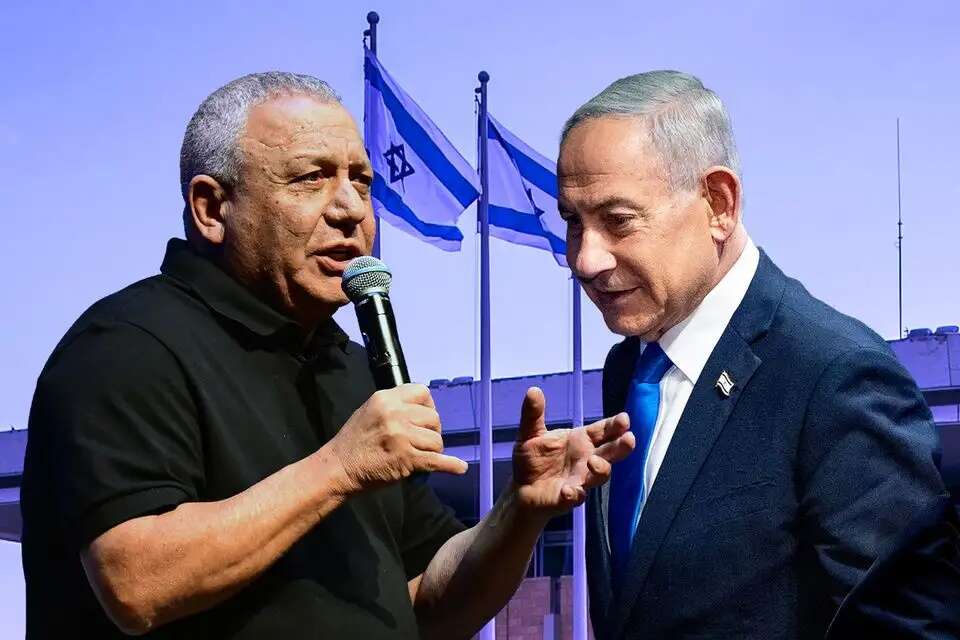
Photo: Benjamin Netanyahu and Gadi Eisenkot. Credit: Israel Hayom.
The exit polls, party by party
Israel's three main networks publish exit polls the moment voting ends. Channel 12 and Channel 13 told one story; Channel 14, the station closest to Netanyahu, told another. Seats are out of 120; a government needs 61.
| Party | Channel 12 | Channel 13 | Channel 14 |
|---|---|---|---|
| Likud (Netanyahu) | 24 | 25 | 30 |
| Yashar (Eisenkot) | 22 | 23 | 19 |
| Together (Bennett and Lapid) | 12 | 14 | 11 |
| Joint List | 11 | 10 | 10 |
| The Democrats (Golan) | 9 | 9 | 9 |
| Yisrael Beytenu (Liberman) | 9 | 7 | 4 |
| Shas | 8 | 6 | 9 |
| Ra'am (Abbas) | 7 | 7 | 7 |
| United Torah Judaism | 6 | 7 | 7 |
| Otzma Yehudit (Ben-Gvir) | 6 | 6 | 7 |
| Religious Zionism (Smotrich) | 6 | 6 | 7 |
The blocs, as the networks drew them:
- Channel 12: Eisenkot's bloc 52, Netanyahu's bloc 50, Arab parties 18.
- Channel 13: opposition 53, coalition 50, Arab parties 17.
- Channel 14: right-wing bloc 60, left-wing bloc 43, Arab parties 17, which would leave Netanyahu one seat short.
- i24NEWS gave Likud 27 and Yashar 20.
Several small lists, including the Reservists party of Ofer Winter and Yaron Zelekha's Economic party, fell below the 3.25 per cent threshold on every poll, so their votes count for nothing and the final seat shares will shift once the real ballots are in. Exit polls in Israel have been wrong by several seats before.
A record turnout
By eight in the evening turnout stood at 74.3 per cent, against 66.3 per cent at the same hour last time, and the Central Elections Committee said it was the highest in decades. Among Israelis voting at embassies abroad, turnout was 86 per cent. Whatever else the night showed, Israelis wanted to be heard.
What the two leaders said
Gadi Eisenkot, the former chief of staff who entered politics after losing a son in Gaza, said the early numbers showed how little confidence the public had left in Netanyahu and "the October 7 government", and that if the results held he would move at once to replace it. Netanyahu had not spoken by the time of writing. His allies pointed out that Likud had, on every poll, beaten Yashar as the largest party, which gives him the first claim on the president's attention.
What happens next
The Central Elections Committee counts through the night and the following days; soldiers' and absentee ballots come last and have swung seats before. The official results are confirmed on 4 November. President Isaac Herzog then consults every party that won seats and asks the member of Knesset most likely to assemble 61 to try, with 28 days to do it and a possible 14-day extension before the task passes to someone else, or the country votes again.
The arithmetic is unforgiving. Netanyahu's bloc of Likud, Shas, United Torah Judaism, Religious Zionism and Otzma Yehudit is at 50 on the mainstream polls. Eisenkot's bloc of Yashar, Together, the Democrats and Yisrael Beytenu is at 52 or 53, and its leaders have ruled out governing with the Joint List, though Ra'am's Mansour Abbas has said he is willing to repeat his 2021 partnership, and the Joint List has offered a "safety net" from outside a coalition in return for commitments on crime and Palestinian statehood. The other roads are a unity government, a rotating premiership, a different prime minister from one of the camps, or a sixth election in seven years, during which Netanyahu would stay on as caretaker.
Why the result was so close
This was the first election since 7 October 2023 and the two-year war that followed in Gaza, Lebanon, Iran and beyond. Netanyahu's government was the first to serve a full term since 1973, but it did so through mass protests over judicial reform, an International Criminal Court warrant for its prime minister, and the collapse of its relationship with the ultra-Orthodox parties, which left the coalition in 2025 over military conscription for yeshiva students. Eisenkot, who sat in the war cabinet after 7 October, built his campaign on competence and accountability for that day. The voters split almost exactly down the middle.
How Christians should pray for Israel now
Scripture does not tell believers which Israeli party to support. It tells them to pray. "First of all, then, I urge that supplications, prayers, intercessions, and thanksgivings be made for all people, for kings and all who are in high positions, that we may lead a peaceful and quiet life" (1 Timothy 2:1-2). And it singles out one city: "Pray for the peace of Jerusalem" (Psalm 122:6).
So pray for Israel's leaders, whoever they turn out to be, for the hostages' families and the bereaved who voted with heavy hearts, for the Arab citizens whose votes now matter more than ever, for the believers in Israel, Jewish and Arab, who are a small minority in both camps, and for the peace of a city whose King is coming (Zechariah 14:4). Those who read the news with Bible prophecy in mind will note that God's purposes for Israel have never depended on who sits in the Knesset (Romans 11:29).
For more current events read in the light of Scripture, see our Prophecy in the News and Eschatology sections.
Questions this article answers
Who won the Israel election on 27 October 2026?
Nobody yet. Exit polls from Channels 12 and 13 put the opposition bloc led by Gadi Eisenkot at 52 to 53 seats and Benjamin Netanyahu's bloc at 50, both short of the 61 needed. Channel 14 gave Netanyahu's bloc 60. Likud was the largest party on every poll. The official count is due on 4 November.
How many seats did Likud and Yashar win?
By the exit polls, Likud took 24 to 30 seats and Eisenkot's Yashar 19 to 23, depending on the network. Together, led by Naftali Bennett and Yair Lapid, took 11 to 14.
How many seats did the Arab parties win?
A record 17 to 18 between the Joint List (10 or 11) and Ra'am (7). Neither main bloc can reach 61 without them or without a unity deal, and the opposition's leaders have ruled out governing with the Joint List.
What happens after the Israeli election?
The Central Elections Committee confirms the result on 4 November. President Isaac Herzog then consults the parties and asks the candidate most likely to form a coalition to try, with 28 days and a possible 14-day extension. If nobody succeeds, Israel could face another election.
Why was this Israeli election important?
It was the first since 7 October 2023 and the war that followed, and a verdict on Netanyahu's government, which served a full term through protests over judicial reform, an International Criminal Court warrant and a split with the ultra-Orthodox parties over conscription. Turnout was the highest in decades.
How should Christians pray about Israel's election?
Pray for all in authority (1 Timothy 2:1-2) and for the peace of Jerusalem (Psalm 122:6): for whoever forms the government, for the bereaved and the hostages' families, for Arab and Jewish believers in Israel, and with confidence that God's purposes for Israel do not depend on the outcome (Romans 11:29).
Sources: exit polls as reported by Israel National News, Ynetnews, The Jerusalem Post and Israel Hayom on 27 October 2026; NBC News, CNN and Axios; Al Jazeera's pre-election guide to the possible outcomes (25 October); the Central Elections Committee's turnout figures. Exit polls are projections; this article will be updated as the count is published.